Sunset Wall Art Placement Checklist for Bedrooms, Hallways, and Living Rooms
Sunset art does something most prints can't. It changes the temperature of a room, throwing warm orange and rose light onto a wall even on a gray afternoon. But that glow only works if the piece sits where the eye expects to find it. Hang it four inches too high and it floats; hang it too small on a wide wall and it reads as a postage stamp. What follows is the checklist used for bedrooms, hallways, and living rooms — the measurements, the sightlines, and the small adjustments that separate a finished wall from a decorated one.
Start with the sightline, not the sofa
Before you own a tape measure, walk. Stand in each doorway of the room and notice where your eye lands first. That spot is prime real estate, and it is usually not the wall above the sofa.
In a bedroom, the strongest sightline is often the wall you face when you wake up, or the wall opposite the foot of the bed as you walk in. In a hallway, it's the end wall you see from the far end. In a living room, it's whatever you look at when you sit down with a cup of coffee — which may be a side wall, not the one behind the television.
Sunset pieces are unusually good at holding a sightline because they carry a built-in focal point: the brightest part of the sky. Place that brightness where you want attention, and keep it out of the path of a door swing, a closet door, or a curtain that gets pulled twice a day.
Height: the benchmark and when to break it
Most installers work from one number: the center of the artwork lands at eye level, commonly cited as 57 to 60 inches from the floor. It's a dependable default because it's roughly where a standing adult looks. From there, adjust for how the room is actually used.
- Above a bed or sofa: leave 6 to 10 inches of breathing room between the top of the headboard or sofa back and the bottom of the frame. Under 5 inches feels crowded; over 12 and the art detaches from the furniture.
- Seated rooms: if you mostly see the wall from a low chair or a bed, drop the center a few inches so the piece doesn't loom.
- Tall ceilings: raising it slightly is fine, but anchor it to the furniture below rather than trying to fill the wall.
- Low ceilings: keep it closer to the furniture line. High-hung art in a short room makes the ceiling feel lower, not higher.
Whatever number you pick, write it down. Consistency across a room is what makes a series of small hangings feel intentional.
Scale: match the art to the furniture below it
A useful working rule: the artwork, or the outer edge of a grouping, should span roughly two-thirds to three-quarters of the width of the sofa, bed, or console beneath it. Narrower than half the width and the art looks stranded. Wider than the furniture and the whole arrangement feels top-heavy.
One large canvas or several smaller ones?
A single big sunset — say a panoramic print of a horizon — gives you one uninterrupted block of color and is the easier choice on a wall with nothing else competing for attention. A triptych or a group of three spreads the same glow across more wall and works better behind a long sofa or down a hallway. Both are legitimate; the mistake is mixing scales at random. If the group includes different sizes, pick one piece as the anchor and build outward from it, keeping the gaps consistent.
Also consider the room's light. West-facing rooms already fill with warm color in the late afternoon, so deep amber pieces can tip into overload. East-facing or north-facing rooms, which stay cooler, handle saturated sunset palettes with more room to spare.
Bedrooms: calm above the pillows
The headboard wall is the obvious spot, and it usually is the right one. Center the piece — or the center of the grouping — on the bed, not on the wall, since furniture is rarely perfectly centered in a room. If the headboard is tall and paneled, keep the art narrow and vertical so it doesn't fight the woodwork.
Two practical notes. First, anything hung above a pillow should be light and securely anchored; skip heavy glass and thick frames directly over where someone sleeps, and use hardware rated for the weight. Second, the wall opposite the bed deserves as much thought as the headboard. A low-key sunset print there gives you something soft to look at before sleep and something pleasant to see on waking, and it costs nothing in floor space.
If the bedroom is small, resist the urge to go tiny. One medium piece on a modest wall often reads better than three small ones, because fewer edges mean less visual noise in a room meant for rest.
Hallways: rhythm and the end wall
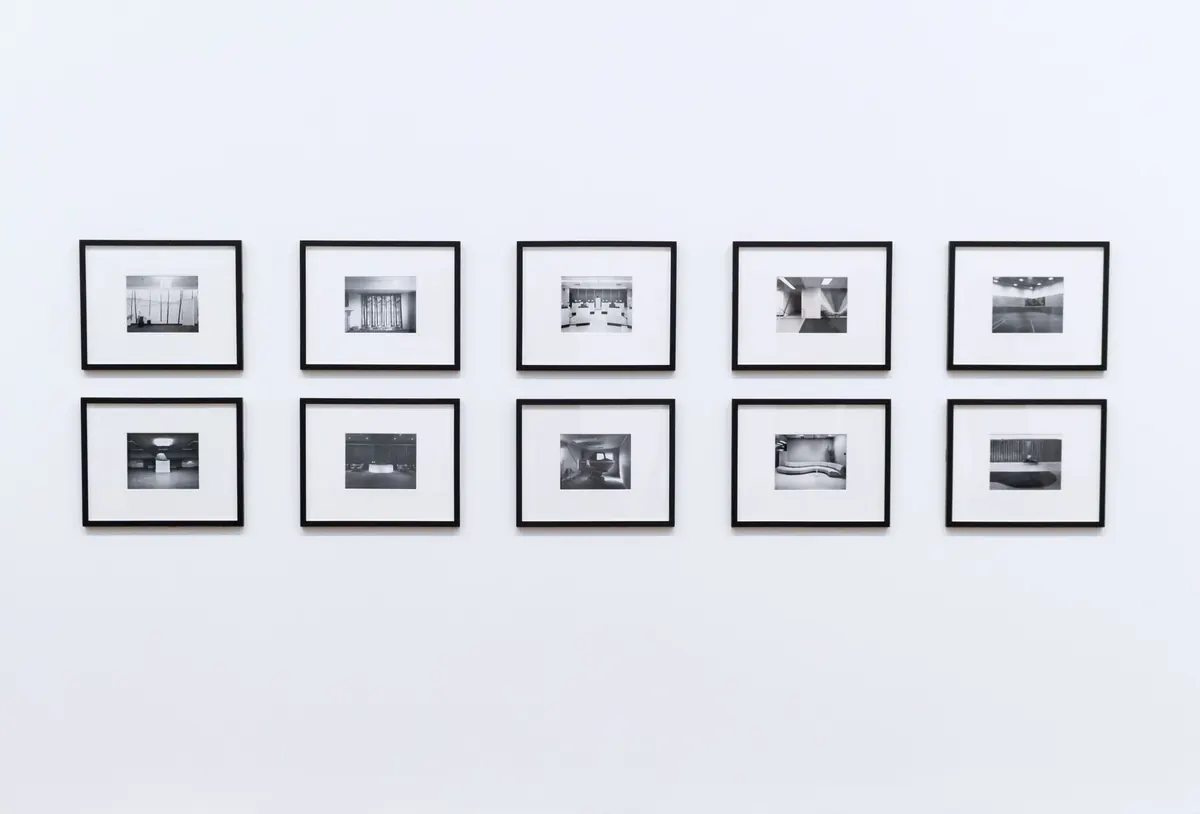
Hallways are where grouping rules earn their keep. In a long corridor, repeat the same frame size at the same height with even spacing — 2 to 3 inches between frames for a tight group, 4 to 6 for a looser one — and the walk becomes a sequence instead of a random assortment.
The end wall is the prize. It's the one surface a person faces for the length of the corridor, so put the strongest sunset there, ideally sized to the wall rather than to the walkway. In a narrow hall, vertical pieces hung singly between doorways keep the passage from feeling pinched; wide pieces need a wall that can actually take them.
Dim corridors deserve a mention. Hallways rarely get good light, and deep reds and purples go muddy without help. A small picture light or a nearby lamp makes the difference between a glowing horizon and a dark rectangle.
Living rooms: the sofa, the mantel, and the television
Above the sofa, the two-thirds rule and the 6-to-10-inch gap do most of the work. Measure the sofa, not the wall, and let the art follow the furniture. If you're building a gallery wall, lay it out on the floor first, or cut paper templates and tape them up for a day. Sunset art makes a good anchor for a mixed group because the warm center pulls the eye and the surrounding pieces can stay quieter.
On a mantel, hang lower than instinct suggests — a few inches above the shelf, so the art relates to the fireplace rather than to the ceiling. Leaning a framed print on the mantel is a valid alternative and lets you skip the hardware entirely.
If a television dominates the room, don't hang a sunset beside it and expect both to hold attention. Give the art its own wall, ideally one you see when the screen is off. Competing focal points on the same plane make a room feel restless.
Final checks before the nail goes in
Run through this list once the piece is chosen and the wall is marked:
- Stand in the doorway and look. Does the art sit on the first sightline, or is it hiding behind the door?
- Sit where you'll actually sit — bed, sofa, favorite chair — and check the height from there.
- Confirm the width against the furniture below, not the wall.
- Check the gap to the headboard, sofa, or mantel is in the 6-to-10-inch range, or deliberately outside it.
- Verify hardware holds the weight, and use proper anchors in drywall; for heavy or oversized pieces, or walls you're unsure about, bring in someone who hangs art for a living.
- Use a level, then step back ten feet. Small tilts are invisible up close and obvious from across the room.
Then leave it alone for a day. Sunset art shifts with the light, and a piece that seemed slightly high at noon often settles into place by evening. If it still nags at you tomorrow, move it — patching a nail hole takes ten minutes, and living with a wall that's almost right takes years.
Photo: Mollyroselee / Pixabay