How to Choose the Right Canvas Size for Sunset Art Above a Sofa
You have found the sunset print — the one with the low horizon and that band of orange bleeding into violet. Then comes the quiet panic of the size menu. Order too small and the canvas floats above the sofa like a postage stamp on a parcel. Order too large and it presses down on the room, swallowing the sofa and the wall alike. The good news is that sizing art above a sofa is mostly arithmetic, with a little judgement at the edges. Measure a few things properly, apply two or three reliable ratios, and the decision makes itself.
Start with the sofa, not the wall
The wall is the backdrop; the sofa is the anchor. Step back and measure the full width of the sofa, arm to arm, at its widest point. Write that number down. Then measure the clear wall width available, from any door frame, window reveal, or built-in to the next obstruction. Finally, measure the height from the floor to the ceiling, and note anything that interrupts the wall: a radiator, a wall light, a thermostat, a switch you actually use.
Those three numbers — sofa width, clear wall width, wall height — are the whole foundation. Everything else is a ratio applied to them.
The two-thirds rule, and when to bend it
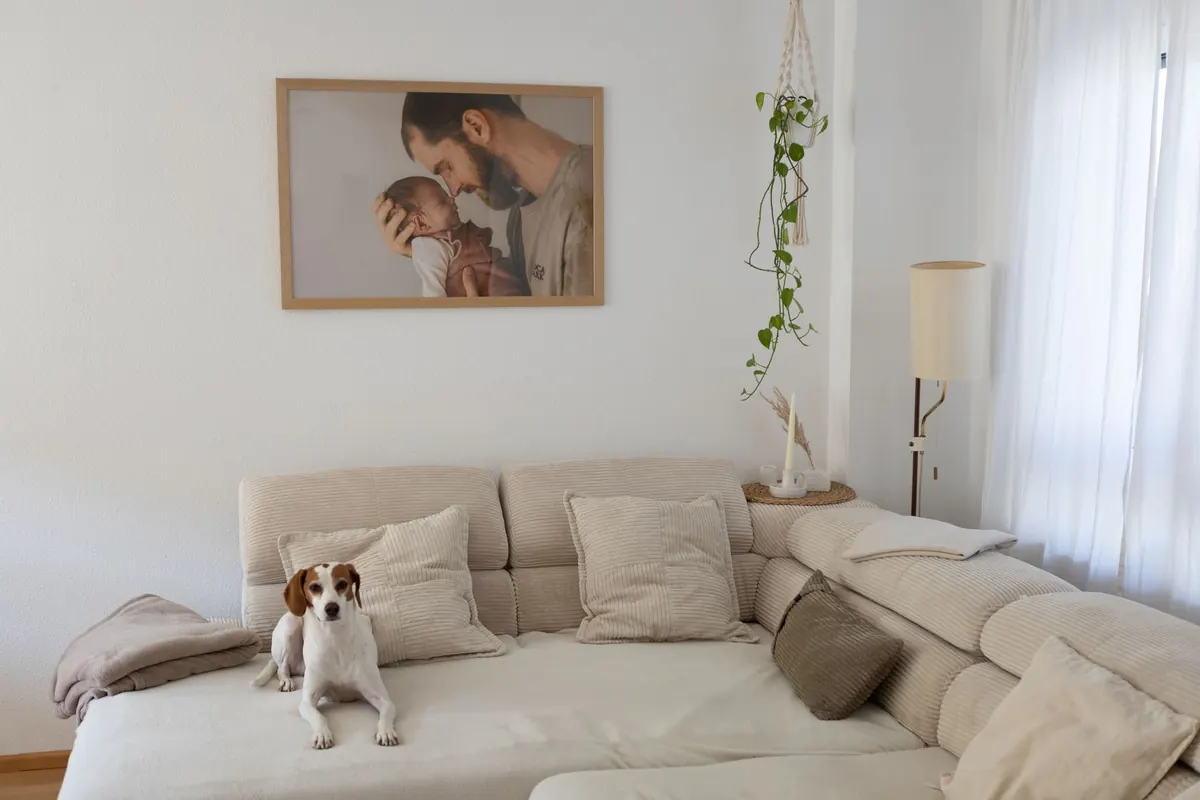
The most useful guideline for art above a sofa is that the canvas should span roughly two-thirds to three-quarters of the sofa's width. That range looks generous without tipping into domination.
- A 210 cm sofa suits a canvas about 140–160 cm wide.
- A 180 cm sofa suits roughly 120–135 cm.
- A 150 cm sofa suits roughly 100–110 cm.
Below two-thirds, the art reads as an afterthought. Above three-quarters, it starts to feel like a headboard. On a narrow wall, though, sofa width is not the only master: leave at least 20–25 cm of breathing space on each side of the canvas, or the piece will look wedged in. If the wall is tight, reduce the canvas and keep the margin — proportion is more forgiving than a cramped edge.
There are two legitimate reasons to break the rule. The first is a very tall room, where a wider, bolder canvas helps fill the vertical void that would otherwise open up above the art. The second is a small sofa in a large, empty room, where going closer to three-quarters gives the seating area a visual centre of gravity it would not otherwise have.
Height: the gap above the sofa matters more than the gap to the ceiling
Hang the canvas too high and it drifts away from the sofa, leaving an awkward strip of bare wall that reads as a mistake. The bottom edge of the canvas should sit about 15–25 cm above the top of the sofa back. Lean towards 25 cm if the sofa has a low back or if people routinely lean back against the wall side; lean towards 15 cm if you have a high-backed sofa and a low ceiling.
A second check: the space above the canvas should generally be larger than the space below it. If the gap between the canvas and the ceiling is smaller than the gap between the canvas and the sofa, the piece is hanging too high — bring it down.
If your sofa sits against a wall in a room where people mostly stand and move through — an open-plan living area, say — it also helps to keep the centre of the canvas near standing eye level, roughly 145–150 cm from the floor. The two rules usually agree. When they don't, the sofa wins.
Proportions that suit a sunset
Sunset art is naturally horizontal: the horizon wants width. That instinct is right, but the exact ratio changes the mood.
3:2 — the safe classic
A canvas such as 90 × 60 cm or 120 × 80 cm is a near-universal fit. It has enough height for a dramatic sky and enough width for the horizon, and it works above almost any sofa without fuss.
2:1 and wider — the panorama
Panoramic formats, from 2:1 up to about 3:1, suit long low sofas and rooms with lower ceilings, because they keep the eye moving sideways rather than upwards. They are also the most elegant choice above a sofa that sits under a window. Be aware that a very wide panorama can look thin on a tall wall; in that case, a slightly deeper 2:1 will hold the space better than a 3:1.
Near-square and vertical formats
A square canvas above a wide sofa usually leaves two odd empty margins, so use one only above a compact two-seater or in a corner arrangement. Vertical formats are useful on narrow walls, or in pairs flanking a lamp, but a single tall canvas centred over a three-seater tends to look like a portrait hovering over a bench.
One more detail: account for the frame. A gallery-wrapped canvas is exactly the size stated, but a floater frame adds roughly 2–3 cm on each side. If you are working to a tight margin, factor that in before you order.
When one canvas becomes two or three
Multi-panel pieces above a sofa follow the same rule as a single canvas: the combined width should still land in that two-thirds to three-quarters band. A triptych over a 200 cm sofa, for example, might total 150 cm across, made of three panels around 46 cm wide with small gaps between them.
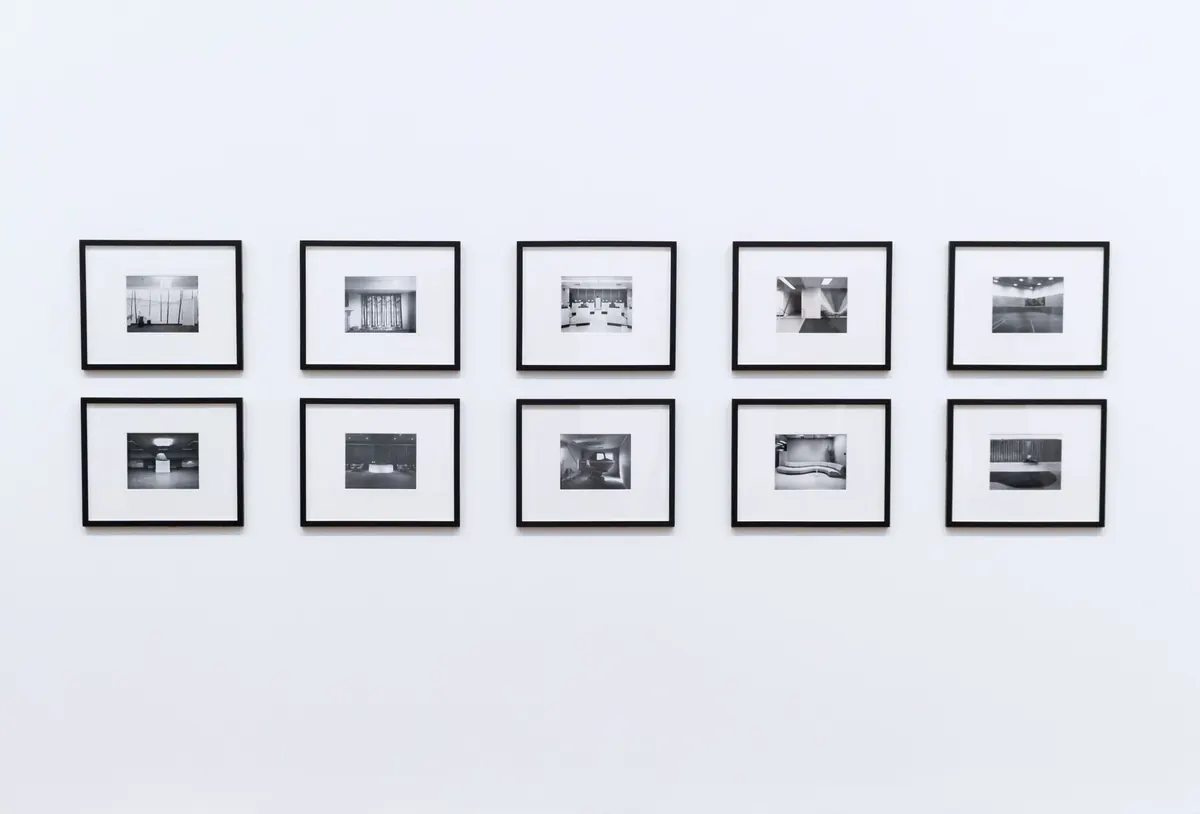
Keep the gaps consistent, somewhere between 5 and 8 cm, and wide enough that each panel reads as its own shape. Panels narrower than about 30 cm start to look like slats. And think about where the split falls: a sunset chopped straight through the sun can look accidental, while a break in the cloud band or at the edge of the glow feels deliberate. If you are hanging a grid of smaller prints instead, treat the whole cluster as one rectangle and measure its outer edges against the sofa.
The paper template test
Before you commit, cut or tape together a paper template at the exact dimensions of your chosen canvas — newspaper and masking tape work perfectly. Tape it to the wall at the height you plan to hang, then leave it there for a day. Look at it from the doorway, from the far corner, from the sofa itself while seated. Check it in daylight and again in the evening with the lamps on.
This dry run catches the things numbers miss: a light switch that suddenly looks crowded, a sightline from the hallway that makes the art feel off-centre, a ceiling slope you had stopped noticing. Adjust the template, not the wall, until it settles.
A short checklist before you order
- Sofa width measured, arm to arm.
- Canvas width chosen at roughly 65–75% of that figure, with at least 20 cm of wall visible on each side.
- Bottom edge planned 15–25 cm above the sofa back, with more space above the canvas than below it.
- Aspect ratio matched to the room — 3:2 as a default, panorama for long low walls, vertical only for narrow spaces.
- Frame depth and any floater frame added into the measurements.
- Wall type and fixings checked; a large canvas needs anchors suited to plasterboard, brick, or whatever is actually behind the paint.
- Paper template lived with for a day before the order goes in.
Get those right and the sunset does the rest. A canvas that fits its sofa properly stops being decoration and becomes part of the room's architecture — the thing the eye lands on when it walks in, and the last thing it rests on before the lamps go out.
Photo: Andreas Ebner / Pexels